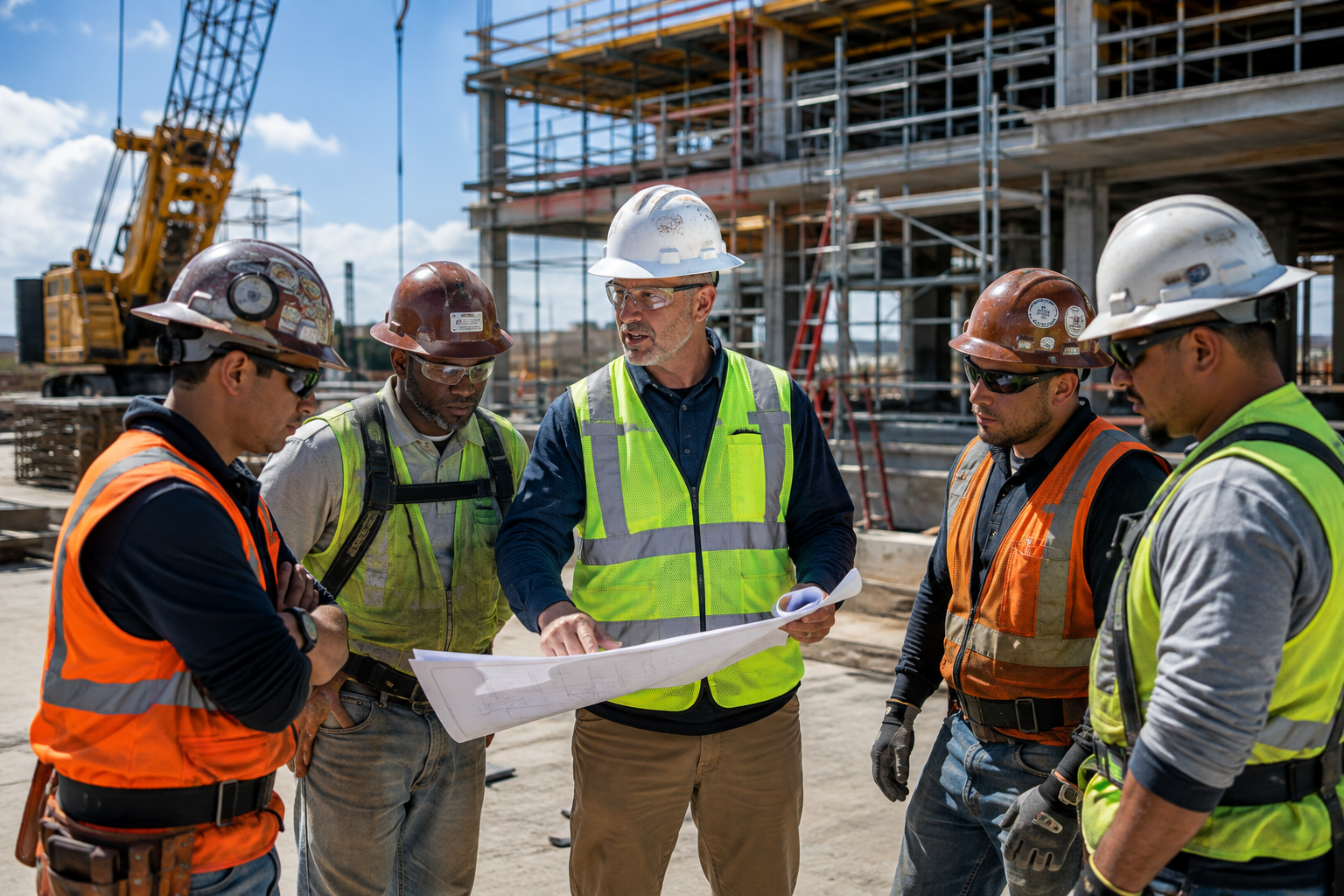
Construction work involves changing environments, heavy equipment, elevated work areas, electrical systems, power tools, and multiple teams working together. When employees are not properly prepared, even an ordinary task can expose them and their coworkers to unnecessary danger.
OSHA safety training gives construction workers practical knowledge that helps them recognize hazards, make safer decisions, and understand their responsibilities on the jobsite. It also helps supervisors and employers establish consistent safety expectations across their teams.
The OSHA Outreach Training Program offers 10-hour and 30-hour courses that introduce workers to common workplace safety and health hazards. Workers who successfully complete the required course receive an OSHA course completion card. However, OSHA clarifies that this card is not a professional certification or license.
What Is OSHA Construction Safety Training
OSHA construction training is designed to improve workers’ awareness of hazards commonly found on construction sites. The training focuses on helping participants understand how workplace incidents happen and what practical steps can be taken to prevent them.
Topics may include:
- Fall prevention
- Electrical safety
- Personal protective equipment
- Scaffolding safety
- Excavation hazards
- Ladder safety
- Power and hand tools
- Material handling
- Health hazards
- Worker rights and employer responsibilities
OSHA’s construction outreach materials emphasize hazard recognition, avoidance, and control rather than simply asking workers to memorize regulations.
This practical approach is important because safety training should influence what workers do in real situations. Employees should leave a training course better prepared to notice unsafe conditions, communicate concerns, and respond appropriately.
Understanding OSHA 10 Hour Training
The OSHA 10-hour construction course is primarily designed for entry-level workers. It introduces participants to essential workplace safety principles and common hazards they may encounter on construction sites.
The course can be valuable for:
- New construction workers
- General laborers
- Equipment operators
- Maintenance personnel
- Contractors entering active jobsites
- Employees who need a basic safety refresher
OSHA 10 training does not replace task-specific instruction from an employer. Instead, it gives workers a broader foundation that can support the company’s internal safety procedures.
For example, an employee may learn general ladder safety principles during OSHA training, but the employer must still explain which ladders are used at the jobsite, how they should be inspected, and what site-specific rules apply.
Understanding OSHA 30 Hour Training
The OSHA 30-hour construction course provides more detailed instruction and is commonly selected for supervisors, managers, foremen, safety personnel, and employees with greater workplace responsibility.
It covers a wider range of subjects and allows more time for discussion, examples, and hazard-control strategies.
OSHA 30 training may be appropriate for:
- Construction supervisors
- Project managers
- Crew leaders
- Foremen
- Safety coordinators
- Business owners
- Employees responsible for directing others
Although OSHA 30 provides more extensive instruction, employers should select training based on each employee’s role, responsibilities, and workplace exposure.
Training Helps Workers Recognize Hazards Earlier
One of the most important benefits of safety training is improved hazard recognition.
Many serious incidents begin with conditions that appear small or routine. A missing guardrail, damaged extension cord, unstable ladder, improperly stored material, or unprotected opening may not immediately cause an injury. However, if the condition is ignored, the risk can quickly increase.
Trained workers are more likely to pause and ask important questions:
- Is this equipment safe to use?
- Is the work area properly protected?
- Do I have the correct personal protective equipment?
- Could another employee be affected by this task?
- Should this condition be reported before work continues?
OSHA requires construction employers to instruct employees in recognizing and avoiding unsafe conditions relevant to their work environment.
Safety Training Creates Consistent Expectations
A construction company may employ people with different levels of experience. Some workers may have spent decades in the industry, while others may be entering a construction site for the first time.
Without consistent training, employees may rely on habits learned at previous jobs. Those habits may not match the current company’s policies, equipment, or site conditions.
A structured training program helps establish shared expectations. Workers receive a common understanding of acceptable practices, reporting procedures, protective equipment, and workplace conduct.
This consistency is especially important when several contractors or subcontractors are working in the same location.
Training Supports Better Communication
Workers should feel comfortable speaking up when they identify a hazard. However, employees may remain silent when they are unsure whether a condition is dangerous or do not know how to report it.
Safety training gives teams a common vocabulary. Workers become better prepared to describe hazards clearly, ask questions, and communicate concerns to supervisors.
Supervisors also benefit because they can explain expectations using terms employees have already encountered during training.
Good communication does not eliminate every workplace risk, but it can prevent hazards from being overlooked.
Training Must Be Relevant to the Actual Job
Generic information alone is not enough to prepare employees for every workplace.
Effective construction safety training should connect general safety principles with the conditions workers face every day. Examples, discussions, and demonstrations should reflect the company’s industry, job tasks, equipment, and workforce.
Training may need to address:
- The specific tools employees use
- Conditions at current jobsites
- Recent incidents or near misses
- Seasonal hazards
- Changes in equipment or procedures
- Emergency response expectations
- Language and literacy needs
Employees are more likely to remember safety information when they can see how it applies to their work.
Bilingual Training Can Improve Understanding
When employees speak different primary languages, safety information must be presented in a way they can understand.
Simply providing a translated handout may not be enough. Workers should have opportunities to ask questions, participate in discussions, and confirm their understanding.
OSHA provides Spanish-language safety resources and identifies Spanish-speaking outreach training options, reflecting the importance of making safety information accessible to Spanish-speaking workers.
English and Spanish training can help employers create a more inclusive learning environment while reducing misunderstandings about workplace expectations.
Training Should Continue After the Course
An OSHA 10 or OSHA 30 course should not be treated as the final step in workplace safety.
Safety knowledge must be reinforced through:
- Toolbox talks
- Pre-task planning
- Equipment demonstrations
- Supervisor coaching
- Jobsite inspections
- Refresher training
- Incident reviews
- Emergency drills
Employers should also provide additional instruction whenever employees take on new tasks, use unfamiliar equipment, or encounter changing hazards.
A strong safety program turns training into everyday action.
Build a Safer and Better Prepared Workforce
OSHA safety training helps construction workers understand common hazards and make more informed decisions on the job. It can also help employers establish consistent expectations, improve communication, and strengthen their overall safety culture.
Elite Safety Training Services provides practical, bilingual safety training for construction teams, supervisors, contractors, and organizations. Our courses are designed to make safety information understandable, relevant, and useful in real working environments.
Contact Elite Safety Training Services to discuss OSHA 10-hour training, OSHA 30-hour training, or a customized safety program for your workforce.