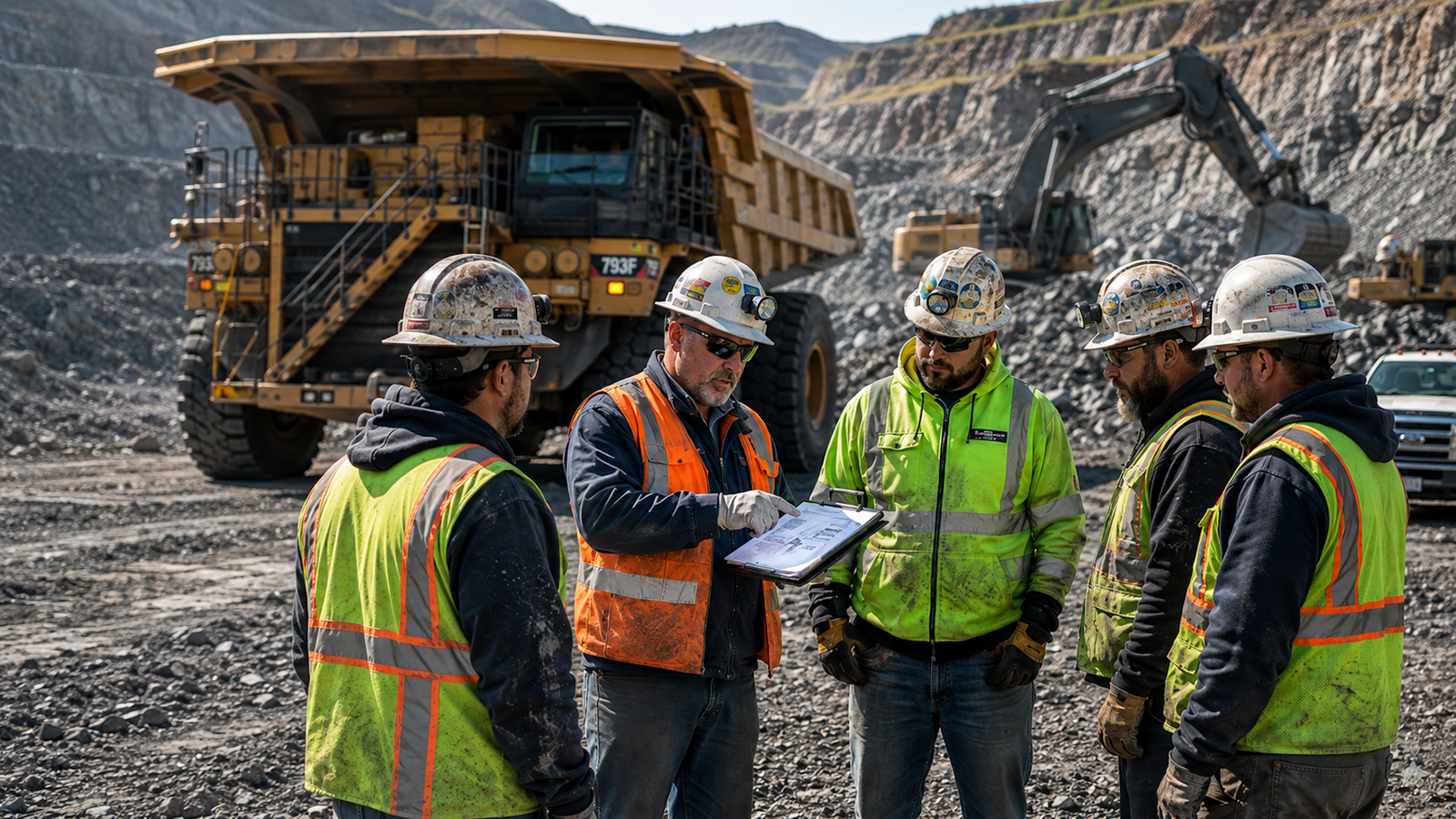
Mining operations present conditions that require specialized knowledge, careful planning, and continuous attention to safety. Miners may work around mobile equipment, machinery, electrical systems, unstable ground, confined areas, explosives, dust, noise, and changing environmental conditions.
Because mining hazards can change from one location or task to another, safety training cannot be limited to a single orientation session.
The Mine Safety and Health Administration requires miners to receive appropriate training, and mine operators must maintain an effective training plan. MSHA describes training as an essential part of its mission to protect miners’ safety and health.
Employers, contractors, supervisors, and miners should understand the different types of training that may apply to their work.
What Is MSHA Training
MSHA training prepares miners to recognize hazards, follow safe work procedures, understand their rights, and respond to emergencies.
The exact requirements can depend on the type of mining operation, the worker’s experience, the assigned task, and the applicable regulation.
Training may address:
- New miner orientation
- Newly hired experienced miner training
- Annual refresher training
- New task training
- Site-specific hazard awareness
- Emergency procedures
- Equipment and machinery hazards
- Electrical hazards
- Ground-control risks
- Health hazards
- Reporting procedures
- Miner rights and responsibilities
Effective MSHA training should not be treated as a generic classroom exercise. It must prepare workers for the conditions they may encounter at the mine.
New Miner Training
New miners need a strong introduction to the mining environment before they begin working independently.
Training should help them understand:
- How the mine operates
- Which hazards are present
- What emergency procedures apply
- How assigned tasks should be performed
- How hazards are reported
- What personal protective equipment is required
- Who has safety responsibilities
- What rights miners have
MSHA’s Part 46 training documentation identifies subjects such as introduction to the work environment, recognition and avoidance of hazards, emergency procedures, task-related safety, miner rights, and hazard-reporting procedures.
New employees may be unfamiliar with both the work and the environment. Instructors should avoid assuming that basic safety expectations are already understood.
Training for Experienced Miners
An experienced miner may understand the mining industry but still require instruction when joining a new operation.
Different mines may use different:
- Equipment
- Traffic patterns
- Communication systems
- Emergency procedures
- Ground-control methods
- Reporting processes
- Work schedules
- Site rules
Past experience is valuable, but it does not replace site-specific preparation.
An employee who operated equipment safely at one location may still need instruction before operating a different model or working under new conditions.
Annual Refresher Training
Safety knowledge can weaken when it is not regularly reviewed. Workplaces also change over time as new equipment, procedures, personnel, and hazards are introduced.
Annual refresher training gives miners an opportunity to revisit important safety subjects and discuss conditions relevant to the current operation.
MSHA states that federal law requires miners to receive annual refresher training.
Refresher topics may include:
- Changes at the mine
- Recent accidents or near misses
- Emergency response
- Equipment hazards
- Ground conditions
- Electrical safety
- First aid
- Health hazards
- Personal protective equipment
- Safe work procedures
- Hazard reporting
Annual training should not consist solely of repeating the same presentation every year. It should reflect the operation’s current risks and recent experiences.
New Task Training
A miner who begins a new task may face hazards that were not covered in detail during previous training.
New task training can be necessary when an employee:
- Begins operating different equipment
- Takes on maintenance responsibilities
- Uses a new tool or system
- Moves into another work area
- Performs an unfamiliar procedure
- Experiences a task change affecting health or safety risks
MSHA training records include specific documentation for new task training when a miner begins a task or when a task change affects health and safety risk.
This instruction should be completed before the employee performs the task without appropriate supervision.
Site Specific Hazard Awareness
Not everyone entering a mine is a full-time miner. Contractors, delivery drivers, vendors, visitors, and service providers may also be exposed to mine hazards.
Site-specific hazard-awareness training helps these individuals understand the conditions relevant to their visit or work.
Topics may include:
- Traffic rules
- Restricted areas
- Communication procedures
- Highwall hazards
- Mobile equipment
- Blasting schedules
- Emergency alarms
- Required protective equipment
- Check-in and check-out procedures
- Reporting expectations
This training should be clear and focused. Employees and visitors need to know what hazards they may encounter and what actions they must take.
Training Records Matter
A strong training program must be supported by accurate documentation.
Records help demonstrate:
- Who received training
- Which subjects were covered
- When the training occurred
- How long the training lasted
- Who provided the instruction
- Where the training took place
- Which type of training was completed
MSHA provides training record and certificate forms for categories including annual refresher, experienced miner, hazard, new task, and new miner training.
Documentation should accurately reflect the training that actually occurred. A signed form cannot replace meaningful instruction.
Effective Training Uses Mine Specific Examples
Workers are more likely to remember information when it is connected to recognizable situations.
Instructors can improve engagement by using:
- Photographs from the operation
- Actual equipment and tools
- Recent near misses
- Common inspection findings
- Emergency scenarios
- Traffic maps
- Workplace demonstrations
- Group hazard-identification exercises
A discussion about mobile-equipment safety becomes more meaningful when it reflects the machines, routes, visibility challenges, and communication methods miners encounter every day.
Supervisors Play an Important Role
Formal instruction may happen only at scheduled times, but supervisors influence safety every day.
Supervisors reinforce training when they:
- Correct unsafe practices
- Recognize safe behavior
- Conduct pre-shift discussions
- Review changing conditions
- Encourage hazard reporting
- Verify employee understanding
- Stop work when necessary
- Provide additional task instruction
If supervisors ignore unsafe shortcuts, employees may conclude that production is more important than safety.
Training and daily leadership must communicate the same expectations.
Hands On Learning Improves Preparation
Mining involves practical work, so training should include practical learning whenever possible.
Hands-on activities may involve:
- Inspecting personal protective equipment
- Identifying equipment hazards
- Reviewing emergency devices
- Demonstrating communication procedures
- Practicing pre-operational inspections
- Walking through escape routes
- Discussing response scenarios
A worker may be able to repeat a rule without knowing how to apply it. Demonstrations and practice help instructors identify whether the employee can perform the procedure correctly.
Training Should Be Understandable to Every Miner
Safety instruction must be communicated clearly.
Technical terminology, unfamiliar abbreviations, and complicated presentations can make important information difficult to remember. Language differences can create additional challenges.
Bilingual instruction can help English and Spanish-speaking miners understand hazards, procedures, and expectations more clearly.
Employers should also consider literacy levels, experience, job responsibilities, and learning styles when planning training.
Common Training Mistakes to Avoid
Mine operators and contractors should avoid several common problems.
Treating Training as Paperwork
The objective should be preparing workers, not simply completing a form.
Using the Same Material for Every Group
New miners, experienced miners, contractors, and equipment operators may have different learning needs.
Ignoring Site Specific Hazards
General training should be supported with information about the actual mine.
Failing to Update the Content
Training should reflect new equipment, procedures, incidents, and changing conditions.
Limiting Employee Questions
Workers need time to clarify anything they do not understand.
Relying Only on Lectures
Visual examples, discussion, demonstrations, and hands-on activities can improve understanding.
Build a Stronger Mine Safety Program
MSHA training helps miners develop the knowledge needed to recognize hazards, perform tasks safely, and respond effectively when conditions change.
A successful program combines regulatory awareness with practical, mine-specific instruction. It also continues beyond the classroom through supervisor coaching, workplace communication, inspections, refresher sessions, and task training.
Elite Safety Training Services provides practical MSHA-related safety training for miners, contractors, supervisors, and mine operators. Our training can be delivered in English and Spanish and customized around the needs of your workforce and operation.
Contact Elite Safety Training Services to discuss new miner training, annual refresher training, task training, or customized mine safety instruction.